

Restorative Sleep: 3 Fascia FLO Practices

To overcome sleep deprivation and achieve deep, restorative sleep, women — especially those navigating perimenopause and menopause — need to address three interconnected layers: targeted myofascial muscle release to remove fascial tension, cellular health support with Fatty15 supplementation, and nervous system regulation with Apollo Neuro wearable technology. Sleep aids alone are not enough. True overnight recovery requires a multi-layered approach that shifts your body out of chronic fight-or-flight and into genuine, deep rest.
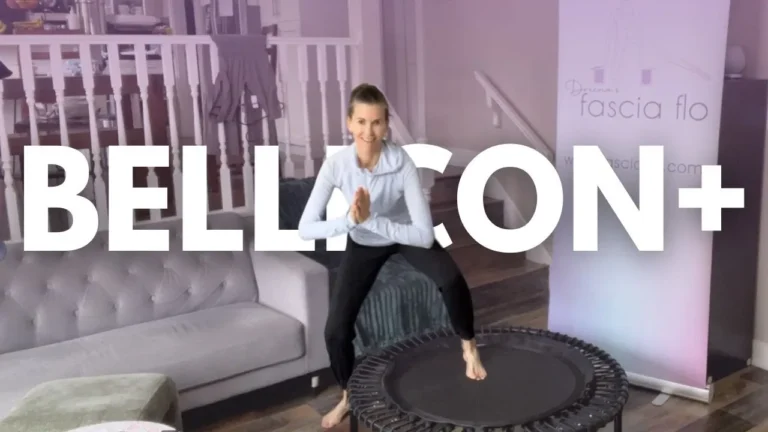
Watch Dreena guide you through a Fascia FLO movement practice — the same approach used to prepare the body for deep, restorative sleep.
For years, I couldn’t understand why achieving deep restorative sleep during menopause felt completely out of reach — no matter how many hours I spent in bed. I’d wake at 2am, mind racing, body tense — or I’d sleep through but still drag myself through the day feeling completely unrestored. Sound familiar? If you’re in your 40s, 50s, or 60s, this is not in your head, and it is absolutely not a personal failing.
What I discovered — through my own body and through building Fascia FLO — is that deep, restorative sleep isn’t just about getting enough hours. It’s about the quality of those hours, and the secret to unlocking that quality lies in myofascial muscle release. Your sleep is directly tied to your hormonal state, your fascial system, and your nervous system’s ability to truly let go. When those three things aren’t supported, you can spend eight hours in bed and wake up feeling like you didn’t sleep at all.
In this post, I’m sharing the three holistic practices that completely transformed my sleep — and that I now teach inside the Fascia FLO community every day.

Hormones, Stress & Why Sleep Gets Harder in Midlife
Prolonged sleep deprivation negatively affects every bodily system — hormone production, immune function, connective tissue repair, emotional regulation, and even bone density. The CDC identifies insufficient sleep as a public health concern linked to chronic disease, impaired cognitive function, and reduced quality of life. But for women in perimenopause and menopause, sleep disruption isn’t simply about stress or screen time. It’s rooted in the hormonal architecture of the female body.
As estrogen and progesterone decline, the nervous system loses two of its most important regulators. Progesterone, in particular, has a calming, GABA-modulating effect on the brain — when it drops, the nervous system becomes hypervigilant, making it nearly impossible to cycle into the deeper stages of sleep where real recovery happens.
What many women experience is spending hours in bed but hovering in light sleep — caught in a low-grade fight-or-flight state that prevents the body from ever reaching the slow-wave, deeply restorative phases. More sleep hours don’t solve this. A different approach does.
Sleep aids can help in the short term, but they don’t address the root causes — fascial tension, nervous system dysregulation, and cellular insufficiency. That’s exactly what the Fascia FLO lifestyle is designed to do.
The Fascia FLO Lifestyle: 3 Core Practices for Deep Sleep
By integrating these three practices — targeted movement, nutritional cellular support, and neuro-technology — you actively alter your physiology rather than just managing symptoms. This is the shift from surviving your nights to truly recovering through them.
Myofascial Muscle Release
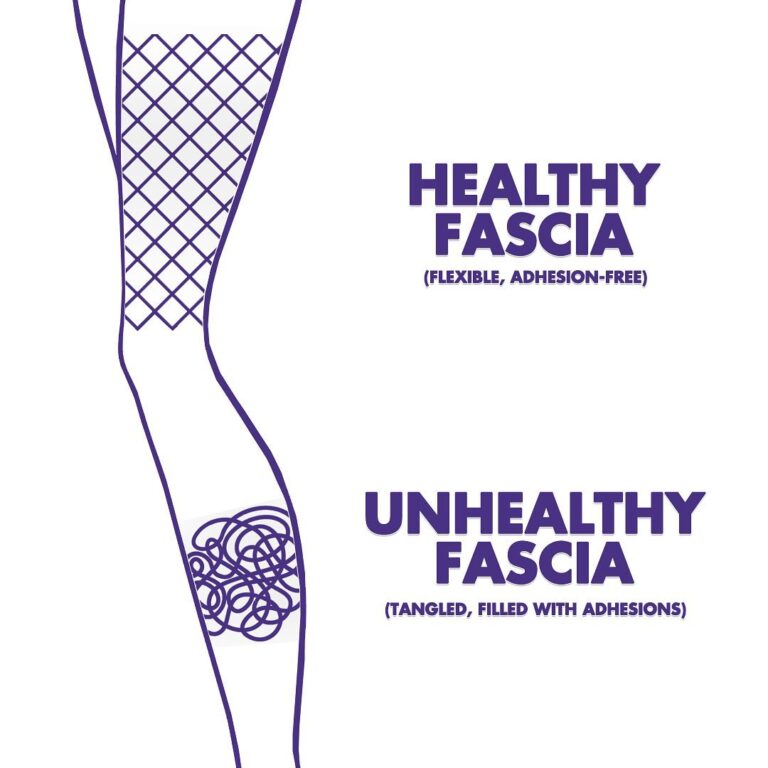
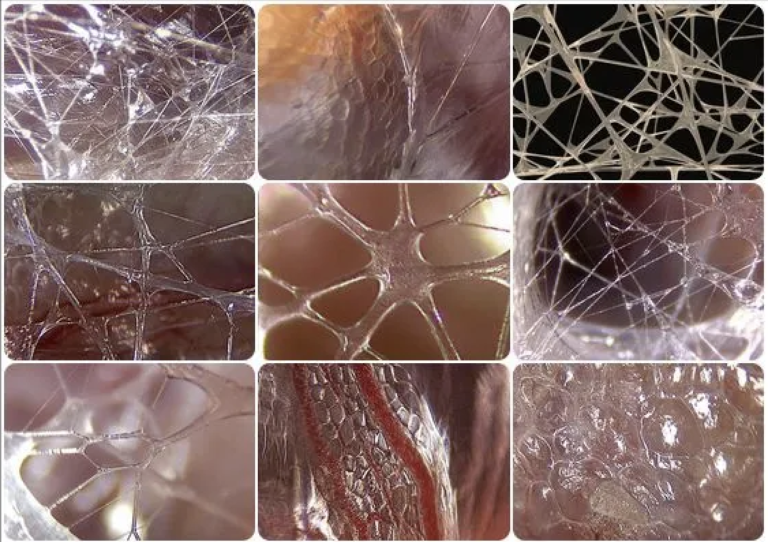
The fascia — your body’s connective tissue network — is not just passive wrapping around muscles and organs. It is a living, responsive system deeply woven into your nervous system and stress response. When fascial tissue becomes tense, stiff, or restricted (as it does under chronic stress, hormonal changes, or sedentary patterns), it holds the body in a state of low-grade physical alarm.
Targeted myofascial muscle release removes that physical tension at the tissue level. Research on fascial tissue and the autonomic nervous system shows that connective tissue release measurably lowers cortisol levels — the body’s primary stress hormone. As the fascia softens, the nervous system receives a signal of safety, moving out of fight-or-flight and into the parasympathetic “rest and digest” state where deep sleep becomes possible.
Even 15 minutes of gentle, intentional myofascial muscle release before bed can create a significant physiological shift. Inside the Fascia FLO app, there are dedicated evening and sleep-prep routines built specifically for this transition — they’re among our most-used practices for a reason.
“When I finally understood that my body was holding stress in my fascia — not just my mind — everything changed. Releasing that tension before bed was the missing piece.”
Cellular Supplementation with Fatty15
Proper cellular nutrition is a foundational — and often overlooked — piece of deep sleep. Fatty15 is a pure, single-ingredient C15:0 (pentadecanoic acid) fatty acid supplement that fortifies cell membrane integrity and mitochondrial function at the deepest level of the body’s biology.
Cell membranes that are structurally compromised struggle to regulate the biochemical signals involved in sleep-wake cycles. When your cells can’t properly manage inflammation, oxidative stress, or metabolic signalling overnight, your body can’t fully repair itself — and sleep quality suffers regardless of how long you’re in bed.
Taking one Fatty15 pill or gummy daily is the protocol. What’s important to understand is that this is cellular repair, not a quick fix. Experts suggest allowing several months for the cumulative benefits to emerge — cellular wall repair requires patience and consistency. I’ve experienced the difference personally, and the depth of sleep I now access is genuinely different from where I was before.
Learn more and explore Fatty15 at fatty15.com.
Why C15:0 Matters for Sleep
C15:0 is an odd-chain saturated fatty acid found in trace amounts in some dairy fats. Research published in Scientific Reports identified it as an essential fatty acid with broad cellular benefits — including activating PPAR-alpha and PPAR-delta receptors that regulate circadian rhythm, inflammation, and metabolic function. These are precisely the pathways that govern sleep quality at the cellular level.
Wearable Neuro-Technology (Apollo Neuro)
Technology, when it’s actually grounded in nervous system science, can be a powerful ally. The Apollo Neuro is a wearable device that delivers gentle, precisely calibrated vibrations to the body — not to stimulate, but to actively train the autonomic nervous system toward greater flexibility and balance.
The protocol I use: wear it on the ankle and cycle through active settings like Focus, Creativity, or Energy during the day to keep the nervous system engaged and responsive. Then in the evening, shift to Recovery, Mindfulness, or Social & Open to begin the wind-down process that primes the body for nighttime.
“The more I use it, the more effective it is at night.”
This is not a passive device — consistent daytime use is essential for nighttime results. The Apollo works by building nervous system capacity over time, similar to how physical training builds muscle. The cumulative effect is a nervous system that can both activate fully during the day and downregulate fully at night — which is precisely what deep sleep requires.
Explore the Apollo Neuro at apolloneuro.com.
Light Sleep vs. Deep Restorative Sleep: What’s Actually Different
Understanding what you’re actually aiming for — and why hovering in light sleep keeps you exhausted — makes the Fascia FLO approach make much more sense. Slow-wave (deep) sleep is when the body releases growth hormone, consolidates memory, repairs tissue, and fully resets the nervous system. Without it, no amount of hours in bed produces genuine recovery.
| Sleep Metric | Hovering in Light Sleep | Deep Restorative Sleep |
|---|---|---|
| Physical Recovery | Minimal — tissues and muscles remain tense, fascial holding patterns persist | Active repair of connective tissue and muscle; cellular regeneration occurs |
| Morning State | Groggy, anxious, or unrefreshed despite hours in bed | Clear-headed, restored — what Dreena calls “blissful and delicious” |
| Nervous System | Stuck in low-grade fight-or-flight; cortisol remains elevated | Full parasympathetic downregulation; complete nervous system regulation achieved |
| Hormonal Effect | Cortisol dysregulation worsens hormonal imbalance cycle | Growth hormone released; supports hormonal rebalancing overnight |
| Duration vs. Quality | 8+ hours in bed can yield poor results if sleep architecture is disrupted | Efficient deep sleep cycles maximize quality — fewer hours, more restoration |
Building Your Holistic Sleep Routine: Day to Night
These three practices work synergistically — they’re most powerful when stacked into a daily rhythm rather than used in isolation. Here’s how to build your full day-to-night protocol:
Morning: Put on your Apollo Neuro (ankle) using Focus or Energy settings. This trains daytime nervous system responsiveness, which directly improves nighttime downregulation capacity.
Midday: Take your daily Fatty15 supplement (one pill or gummy with a meal). Consistency over months is how cellular benefits accumulate — this is a long-game practice.
Afternoon / Early Evening: Shift Apollo Neuro to Social & Open or Creativity settings as you transition from high-output to wind-down mode.
Evening: Switch Apollo Neuro to Recovery or Mindfulness vibes. Begin preparing your nervous system for nighttime 1–2 hours before bed.
Pre-Bed (15 min): Complete an evening routine from the Fascia FLO app. The sleep-prep and evening release routines are designed to lower cortisol, soften fascial tension, and signal the body that it’s safe to rest deeply.
Result: With consistent practice over weeks and months, you build the physiological capacity for true deep sleep — the cumulative kind that changes how you feel in your body, your energy levels, and your day.
“Deep sleep isn’t a luxury — it’s when your body repairs fascia, balances hormones, consolidates memory, and rebuilds bone density. Everything we work for in Fascia FLO depends on the quality of your nights.”
Ready to Try Fascia FLO?
Join thousands of women transforming their sleep, mobility, and energy through the Fascia FLO lifestyle.
View App →Frequently Asked Questions
These are the questions I hear most often from women in the Fascia FLO community about sleep, nervous system regulation, and these three practices.
How does myofascial muscle release help with sleep deprivation?
Targeted myofascial muscle release helps lower cortisol levels and release physical tension held in the fascial network. This moves the body out of fight-or-flight mode and signals safety to the brain, creating the physiological conditions needed for deep, restorative sleep. Even a short 15-minute evening routine can meaningfully shift your nervous system state before bed.
Why can’t women in menopause achieve deep sleep?
Hormonal fluctuations during perimenopause and menopause significantly disrupt sleep architecture, causing women to remain trapped in light sleep stages even after spending many hours in bed. Without sufficient progesterone and estrogen, the nervous system struggles to fully downregulate, preventing the body from reaching the deeper, restorative sleep cycles where physical and cellular repair occurs.
How do you use the Apollo Neuro for better sleep?
Wear the Apollo Neuro device on your ankle and cycle through active settings like Focus, Creativity, or Energy during the day to train your nervous system. In the evening, transition to Recovery, Mindfulness, or Social & Open modes to begin the wind-down process. Consistent daytime use is essential — the more regularly you use it throughout the day, the more effective it becomes at promoting deep sleep at night.
How long does it take for Fatty15 to improve deep sleep?
Fatty15 works at the cellular level, fortifying cell membrane integrity over time. Experts suggest taking one pill or gummy daily and allowing several months for the full cumulative benefits to emerge. Cellular wall repair is a gradual process, and the sleep benefits deepen progressively rather than appearing overnight. Patience and consistency are essential for long-term results.
Is it possible to sleep 8 hours and still feel exhausted?
Yes — if you are spending those hours hovering in light sleep rather than cycling into deep, restorative stages, the duration of sleep matters far less than its quality. Factors like elevated cortisol, fascial tension, poor cellular health, and an under-regulated nervous system can all prevent the body from achieving the slow-wave sleep where true physical and mental recovery happens. This is exactly why the Fascia FLO approach addresses the root causes rather than just sleep duration.
What is the difference between light sleep and deep restorative sleep?
Light sleep offers minimal physical recovery — tissues remain tense, the nervous system stays in low-grade fight-or-flight, and you wake feeling groggy or unrefreshed despite hours in bed. Deep restorative sleep, by contrast, involves active repair of connective tissue and muscle, full nervous system regulation, cellular regeneration, and waking with the clear, blissful feeling that signals true overnight recovery.
Dreena Burton is a certified yoga instructor, somatic movement specialist, and the creator of the Fascia FLO app. After overcoming years of chronic joint pain through targeted connective tissue release, she developed Fascia FLO to share the tools she used to restore mobility, release trauma, and heal her body. She is the author of six solo cookbooks and has been featured on The Food Network, Blue Zones, and Forks Over Knives.