
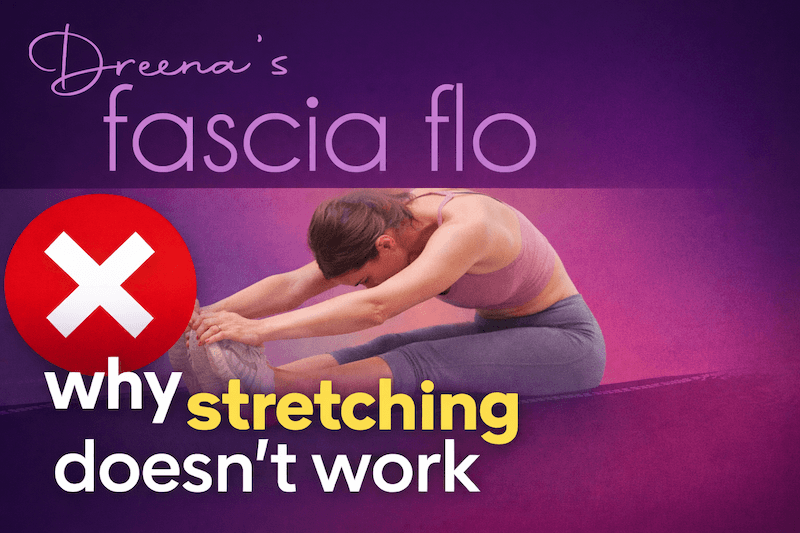
Connective Tissue Support: Why Stretching Doesn’t Work

Stretching feels productive, but for most people it’s actively working against their connective tissue support — triggering the body’s protective stiffening response rather than undoing it. True fascial health comes from working with your nervous system: gentle, frequent movement that restores the natural buoyancy and recoil of your connective tissue, rather than forcing it past its limits. If stretching is leaving you stiffer, tighter, or in more pain than before, it’s not you — it’s the method.
Watch Dreena demonstrate fascial movement and pandiculation — no equipment, no forcing, just working with your body’s natural intelligence.
If you’ve been faithfully following a stretching routine and still waking up stiff, sore, and wondering why nothing is changing, the answer might lie in your connective tissue support — or more specifically, in the way conventional stretching works against it. I stopped stretching four years ago. I know — that sentence alone probably made you wince. But here’s the thing: at 55, my body feels better than it did at 30. And the reason is fascia.
Most of us were never taught how our connective tissue actually works. We were taught to stretch it — hold for 30 seconds, feel the burn, repeat. What we weren’t told is that this approach can be actively working against us, particularly as we move through our 40s and 50s and our hormonal landscape shifts. The good news? Once you understand how your fascia really wants to move, everything changes.
Why Stretching Isn’t Working — and May Be Making Things Worse
Here’s something that stopped me in my tracks when I first learned it: the stiffness you feel after a hard stretch session the next morning? It’s not a sign you need to stretch more. It’s your body protecting itself from what it perceived as damage.
When you force muscle and fascial tissue past its natural resistance point — which is exactly what static and passive stretching does — the body registers it as microtrauma. It responds by laying down new fascial tissue like little band-aids over the area. Those band-aids are, by design, stiffer than the surrounding tissue. So the very thing you’re doing to get more flexible is triggering the body’s defensive response to make you less flexible. It’s a cycle that can go on for years.
The “stretch reflex” — your muscle’s automatic tightening response when pulled — exists precisely to protect the joint and tissue from injury. When we hold a stretch long enough to push past it, we’re overriding a safety mechanism, not outsmarting it.
This doesn’t mean all movement is bad. It means the kind of movement matters enormously. There’s a better way — and it’s one your body already knows instinctively. You’ve just never been taught to do it intentionally.
What Is Connective Tissue and Why Does It Matter?
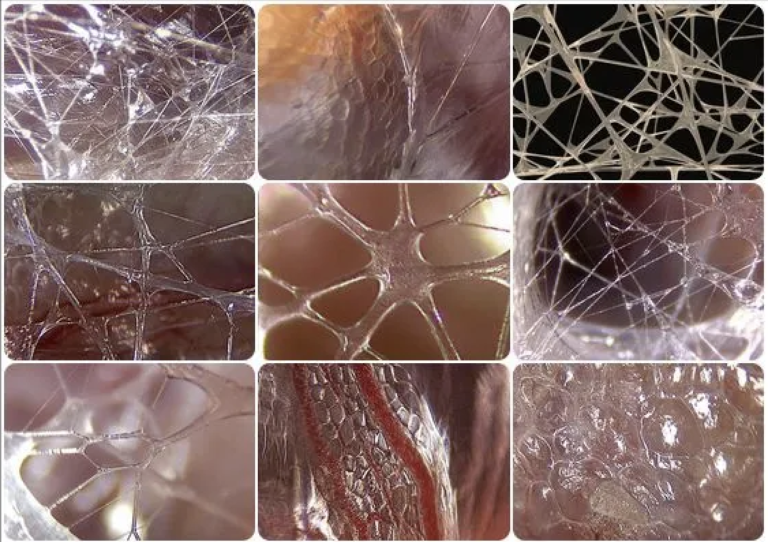
Fascia is your body’s connective tissue — the biological mesh that wraps, separates, connects, and supports everything in your body: every muscle, bone, organ, nerve, and blood vessel. Proper connective tissue support isn’t just about flexibility — it’s about keeping this entire system hydrated, pliable, and communicating freely with your nervous system in real time.
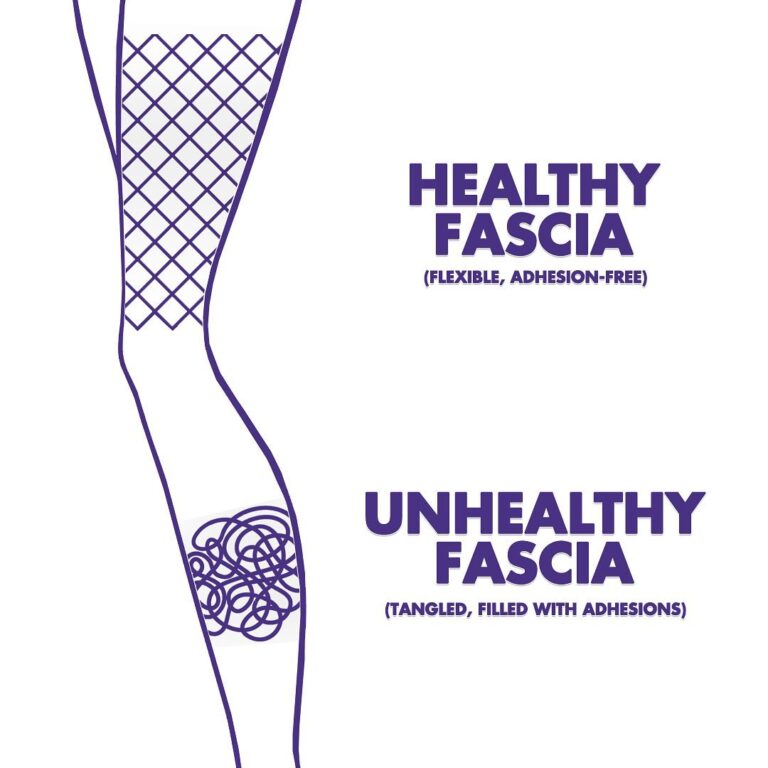
Think of it like a full-body wetsuit made of biological mesh. When it’s hydrated, pliable, and moving as it’s designed to move, you feel buoyant, free, and coordinated. When it becomes dehydrated, matted, or damaged — through over-stretching, long hours of sitting, repetitive strain, or the hormonal shifts of menopause — that buoyancy disappears. Movements that used to feel easy start to feel effortful. And no amount of conventional stretching addresses the root cause.
What the Research Says About Connective Tissue Support
Fascia researcher Dr. Robert Schleip and anatomist Carla Stecco have spent decades documenting the myofascial system. Their work shows that fascia contains significantly more sensory nerve endings than muscle tissue — meaning it’s one of the body’s primary sensing organs, not just structural scaffolding.
Fascia also has its own contractile ability, meaning it can tighten and release independently of muscle. This is why fascial stiffness doesn’t always respond to muscle-focused stretching, massage, or foam rolling — you’re working on the wrong tissue with the wrong approach.
Healthy fascia is characterised by its recoil — the springy, elastic quality that allows it to store and return energy with every step. This recoil is precisely what’s lost through years of static stretching and what’s restored through pandiculation-based movement.
What Is Pandiculation and How Does It Work?
Pandiculation is what your cat does every single time it gets up from a nap. It’s what your dog does first thing in the morning before it’s taken two steps. It’s the instinctive full-body contract-expand-release that resets neuromuscular tension and wakes up the fascial network. Animals do this dozens of times a day. Humans? We’ve replaced it with static holds and gym routines.
The word itself comes from the Latin pandiculari, meaning to stretch oneself. But the mechanism is the opposite of what we typically call stretching. Rather than pulling tissue to its end range and holding it there, pandiculation involves actively contracting into the tension, expanding through it slowly, and then releasing — allowing the nervous system to reset the resting length of the muscle and the recoil quality of the surrounding fascia.
“Pandiculation doesn’t fight your body’s resistance signal — it works with it. That’s the whole difference. And once you feel it, you’ll never want to go back to forcing a stretch.”
— Dreena Burton, Fascia FLOThe result isn’t just a temporary feeling of looseness (which is often what stretching delivers). It’s an actual neurological recalibration — your nervous system relearning the appropriate resting tension for the tissue, which means the change lasts.
Stretching vs Fascial Movement: Side-by-Side Comparison
Here’s how these two approaches stack up across the things that actually matter for long-term connective tissue support and pain-free movement:
| Factor | Fascial Movement | Static Stretching |
|---|---|---|
| Mechanism | Active contraction → slow expansion → full release | Passive lengthening held at end range |
| Works with nervous system? | Yes — resets neuromuscular tension patterns | Often overrides protective reflexes |
| Connective tissue impact | Restores recoil, buoyancy, and long-term support | Can cause microtrauma and stiffening |
| Frequency | Throughout the day, whenever needed | Typically post-workout or morning routine |
| Immediate result | Lasting neurological reset | Temporary looseness |
| Risk of injury | Very low — follows body’s natural limits | Higher — especially with cold or aging tissue |
| Suitable for menopause? | Yes — particularly effective for hormonal stiffness | Often worsens hormonally-driven fascial changes |
| Animal analogy | What cats & dogs do naturally | What humans invented and called movement |
The Science Behind Connective Tissue Support
Understanding why stretching isn’t working requires understanding one key concept: genuine connective tissue support doesn’t operate on muscle logic alone — it operates on nervous system logic. The tension in your muscles is not primarily determined by the muscle itself but by the motor neurons that control it. Chronically tight muscles are chronically receiving signals from the nervous system telling them to stay contracted.
This is what Thomas Hanna, one of the early pioneers of somatic movement, called “sensory-motor amnesia” — the nervous system losing its ability to release patterns of chronic contraction because it has forgotten there’s another option. Pandiculation is the movement equivalent of reminding it.
Sensory-Motor Amnesia and Fascial Reset
Sensory-motor amnesia develops gradually. Years of postural habits, emotional holding patterns, repetitive strain, or the compensations we make around pain or injury all leave traces in the nervous system. The body’s motor cortex essentially stops sending “release” signals to areas that have been chronically contracted — because it no longer perceives there’s a problem. The tension has become the new normal. (Association for Hanna Somatic Education)
Pandiculation interrupts this pattern by deliberately increasing the contraction first — giving the nervous system a clear starting point — before slowly releasing. This contrast is what creates the neurological reset. The brain perceives the change and updates its “setting” for that tissue.
Static stretching, by contrast, works on the tissue directly but doesn’t address the nervous system signal driving the tension. This is why you can stretch the same muscle every day for a year and still feel tight the next morning. The problem isn’t in the muscle — it’s in the signal. A 2022 clinical study published in PMC on Hanna Somatic Education found that pandiculation-based neuromuscular retraining produced significant reductions in pain levels and doctor visits in patients with chronic neck and low back pain.
The Three Phases of Pandiculation
Pandiculation has a clear and repeatable structure. Once you understand the three phases, you can apply it to almost any area of tension in the body — and you’ll start to notice your own natural pandiculation impulses (that spontaneous full-body shudder when you’ve been sitting too long? That’s it).
Intentional Contraction
Actively and gently move into the tight area rather than pulling away from it. If your lower back is tight, arch slightly into it. If your shoulders are rounded, round them further. This isn’t about force — it’s about deliberate engagement. You’re giving the nervous system a clear signal: I see you, I’m here, we’re going to reset.
Slow Expansion with Tension
From the contracted position, very slowly begin to move in the opposite direction — expanding through the tissue, letting it lengthen with awareness rather than force. This phase is slower than you think. Think of it like slowly unspooling a tightly wound coil. The nervous system needs time to process the changing length and update its signal.
Complete Release
At the end of your range, don’t hold — let go completely. Allow the body to settle back to neutral without guiding it. This final release is where the neurological reset actually happens. The muscles and fascia return to a new, more appropriate resting length, and the nervous system registers the updated pattern. Repeat 3–5 times in any given area.
The most common mistake in pandiculation is going too fast. The slow, conscious movement through each phase is what differentiates it from simply wiggling around. Aim for a pace that makes you genuinely aware of what the tissue is doing at every moment.
Why This Matters Extra During Menopause
If you’re in perimenopause, menopause, or postmenopause and you’ve noticed a sudden increase in joint pain, morning stiffness, or that feeling of moving through treacle — you’re not imagining it, and it’s not just about ageing. Declining oestrogen directly affects fascial tissue.
Oestrogen plays a significant role in maintaining the hydration and elasticity of connective tissue throughout the body. As levels drop, fascia can become less pliable, more prone to adhesion, and slower to recover from movement demands. Research published in PLOS ONE confirmed that during menopause, collagen-III and fibrillin contents decrease significantly in fascial tissue, directly reducing its elastic properties. This is compounded in women who have been stretching conventionally for years, as the accumulated microtrauma effect begins to show up more prominently when the tissue’s repair capacity is reduced.
The Menopause-Fascia Connection
Working with the myofascial system through pandiculation and somatic movement is particularly well-suited to this life stage because it asks nothing from the body that the body isn’t ready to give. There’s no pushing to end range. No holding positions that tax hormonal or structural resilience. Just intelligent, graduated movement that communicates safety to the nervous system — which, during menopause, is often running on high alert anyway.
Many women in the Fascia FLO community report significant reductions in joint pain, morning stiffness, and the sense of their body “seizing up” within weeks of replacing their stretching routine with fascial movement work. The approach supports rather than depletes — which is exactly what the body needs during hormonal transition.
How to Start Supporting Your Connective Tissue
You don’t need to overhaul your entire movement practice overnight. The most sustainable way to begin is to replace one stretch-based habit with a fascial movement one and notice how your body responds. Here’s a simple daily connective tissue support practice to get you started:
Morning Reset (5 minutes)
Before you get out of bed, do a full-body pandiculation. Contract every part of your body gently — curl, tighten, squeeze — then slowly expand outward in all directions and release completely. Repeat 3 times. This resets fascial tension accumulated during sleep and primes the nervous system for the day.
Midday Fascial Hydration (3–5 minutes)
Move through slow, full-range motions in the areas that feel most restricted — spine, hips, shoulders. Not stretching to end range — just moving through your natural, comfortable range with awareness and without force. Fascial tissue hydrates through movement, so even gentle, frequent movement matters more than one intense session.
Evening Release (10 minutes)
Use guided pandiculation practices to release the tension accumulated through the day. Focus on three or four areas — whatever felt most held or effortful. Move slowly, breathe, and allow genuine release after each sequence rather than moving on immediately.
Connective tissue support responds to frequency more than intensity. Five minutes of conscious fascial movement three times a day will outperform an hour-long stretch session done twice a week. The tissue thrives on regular, gentle communication — not occasional forced confrontations.
Frequently Asked Questions
What is connective tissue support and why does it matter for flexibility? ▾
Connective tissue support refers to the health, hydration, and functional integrity of your fascia — the biological mesh that wraps every muscle, bone, organ, and nerve in your body. When your connective tissue is well-supported, it’s pliable, buoyant, and resilient.
When it’s damaged, dehydrated, or stuck — through over-stretching, poor movement habits, or hormonal changes — stiffness, pain, and restricted mobility follow. Supporting your connective tissue means working with it through gentle, frequent movement rather than forcing it.
Why isn’t stretching working for my stiffness and pain? ▾
When you overlengthen muscle and fascial tissue through prolonged stretching, the body treats this as microtrauma and sends in new connective tissue — like little band-aids — to repair the area. This repair process causes the tissue to become stiffer as a protective mechanism.
The stiffness you feel the next morning is your body protecting itself from what it perceived as damage, not a sign you need to stretch more. True connective tissue support requires working with the body’s natural resistance signals, not overriding them.
How does connective tissue support help with menopause joint pain? ▾
Working with the myofascia — the connective tissue network that wraps and links every muscle, bone, and organ — helps restore the natural recoil and buoyancy of tissue that is often lost through years of over-stretching, sedentary habits, or the hormonal changes of menopause.
Fascia FLO techniques signal the nervous system to release chronic tension rather than forcing muscles to lengthen, resulting in genuine connective tissue support, flexibility, and pain reduction without the cycle of stiffness. This is particularly effective during perimenopause and menopause, when declining oestrogen reduces fascial elasticity and recovery capacity.
What does a connective tissue support practice look like day to day? ▾
Connective tissue support through fascial movement involves three daily touchpoints: a morning reset using gentle pandiculation before getting out of bed, a midday hydration practice of slow full-range movement through restricted areas, and an evening release sequence targeting the day’s accumulated tension.
Unlike static stretching, this approach is done gently and frequently — fascia responds to regularity, not intensity. Even five minutes three times a day produces more lasting results than a single hour-long stretch session.
Is it really possible to feel as flexible at 55 as you did at 30? ▾
According to Dreena Burton, who stopped stretching four years ago and switched to fascial movement and connective tissue support work, yes — it is possible. She reports that at 55, her body feels as good as it did in her 30s, without a single conventional stretch in her routine.
While individual results vary, working with rather than against the myofascial system restores the tissue’s natural elasticity and recoil, which can significantly improve mobility, reduce pain, and support active ageing — especially for women navigating the physical changes of menopause.
Why do animals never seem to get stiff the way humans do? ▾
Animals naturally pandiculate — they contract, expand, and release throughout the day without ever forcing or holding a stretch. This instinctive movement keeps connective tissue buoyant, hydrated, and responsive.
Humans have largely replaced natural movement patterns with static stretching routines, prolonged sitting, and repetitive exercises that damage fascial tissue over time. Relearning to move the way the body was designed to move is a cornerstone of the Fascia FLO approach to connective tissue support.
What is the Fascia FLO method and how is it different from yoga or regular stretching? ▾
Fascia FLO is a somatic movement method developed by Dreena Burton that works specifically with the myofascial system to provide lasting connective tissue support using techniques like pandiculation, fascial unwinding, and body-awareness cues rather than forced flexibility work.
Unlike yoga, which can sometimes encourage over-lengthening, or regular stretching that fights the body’s natural resistance signals, Fascia FLO works with the nervous system and connective tissue to restore natural movement, reduce pain, and build lasting functional flexibility — without any of the push-through-it mentality that often leads to injury or chronic stiffness over time.
Ready to Try Fascia FLO?
Join thousands of women transforming their mobility, energy, and wellbeing through the Fascia FLO lifestyle.
View App →
Medical Disclaimer: The information in this article is for educational purposes only and is not intended as medical advice. Always consult a qualified healthcare provider before starting any new movement practice, particularly if you are managing a health condition, injury, or are pregnant.
Affiliate Disclosure: This post may contain affiliate links. If you purchase through these links, Fascia FLO may earn a small commission at no additional cost to you. We only recommend products and services we genuinely believe in.