

5 Fascia Release Exercises for Low Back Pain Relief

Fascia release exercises for low back pain work by first contracting, then lengthening key muscle chains — the hamstrings, IT band, and inner thighs — while maintaining resistance throughout. According to Dreena Burton, somatic movement specialist, this FLO method (Flex–Lengthen–Observe) stimulates fascial tissue on a cellular level, restores pelvic alignment, and relieves the compression that drives most low back pain in women over 45.
Key Takeaways
- The Fascia FLO method uses a Flex–Lengthen–Observe formula that differs from traditional stretching by keeping the muscle engaged throughout — making it more effective for fascia release and long-term pain relief.
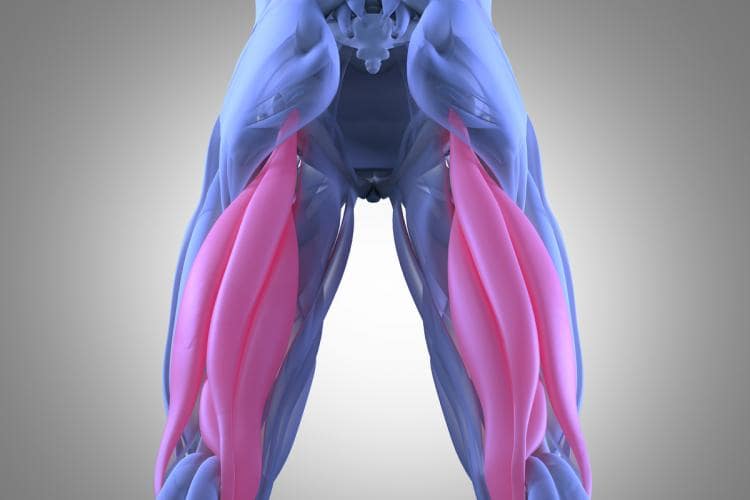
- Dense, stuck fascia in the hamstrings and lateral hip muscles pulls the pelvis out of neutral alignment, creating the compression that causes most low back and SI joint pain.
- According to Dreena Burton, the fascial chains targeted in this routine align with the gallbladder and liver meridians in Chinese medicine — two systems that directly govern health of the hip girdle and low back.
- All five exercises in this routine are designed to be knee-friendly, with chair-seated options — making them safe for women dealing with joint pain, menopause-related stiffness, and lower mobility.
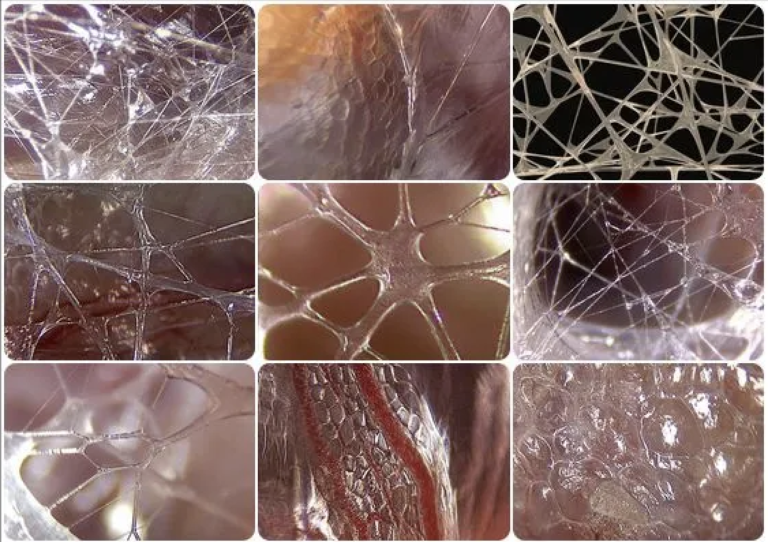
- Fascia cannot be separated from muscle, bone, or organ — it is a continuous tissue from head to toe that literally holds the body’s shape, making its health central to pain-free movement.
- Practicing this fascia release routine several times per week produces cumulative results; many women notice a measurable difference in hip and back sensation even within a single first session.
- Why Fascia Is the Missing Piece in Low Back Pain
- The FLO Formula: Flex, Lengthen, Observe
- Before You Begin: The Body Check-In
- The 5 Fascia Release Exercises for Low Back Pain
- Meridians + Fascia: The Deeper Connection
- Traditional Stretching vs. Fascia Release
- How Often Should You Practice?
- Frequently Asked Questions
Fascia release is the key that most low back pain treatments are missing. If you’ve tried stretching, core work, or heat packs without lasting relief, there’s a very good reason — and it has everything to do with the dense, sticky fascial tissue wrapping your muscles and pelvis. In this post and video, I’m going to show you five Fascia FLO moves that directly target the chains of fascia driving your low back pain, so you can start feeling real, lasting change.
Fascia FLO with Dreena Burton — five knee-friendly fascia release exercises for low back and SI joint pain. All you need is a chair.
Why Fascia Is the Missing Piece in Low Back Pain
Most approaches to low back pain focus on muscles, discs, or core strength. But there is a continuous, intelligent tissue wrapping every single structure in your body — and when it becomes dense, stiff, and unresponsive, it creates pulling, compression, and pain. That tissue is your fascia.
According to Dreena Burton, “The fascia is everywhere in your body — it is a beautiful continuous tissue from head to toe that literally holds everything together. We would still have our shape without bones or muscles, because the fascia holds it all.” When this tissue becomes thick and stuck — through prolonged sitting, walking on hard surfaces in shoes, and repetitive daily habits — it begins to exert forces on your skeleton that no amount of stretching or core strengthening can fully address.
Research published through the National Library of Medicine has identified fascia as a mechanically active tissue — not just passive wrapping. When fascial tissue loses its normal gliding capacity, it transmits abnormal forces through the body, contributing to pain sensitisation and restricted movement.
The Mayo Clinic notes that low back pain is one of the most common complaints among adults, with causes frequently traced to muscle imbalance and connective tissue restrictions — both of which the Fascia FLO method directly targets.
For women in perimenopause and menopause, declining oestrogen accelerates the loss of collagen — a primary structural protein in fascia — making fascial care especially important during midlife. Healthline notes that musculoskeletal pain is one of the most commonly reported but least-discussed symptoms of menopause.
Mayo Clinic
Healthline / Research
Estimated clinical prevalence
The FLO Formula: Flex, Lengthen, Observe
Everything in this routine follows the same three-step formula. It’s called the FLO method — and once you understand it, every exercise will make immediate sense.
“The F is for Flex — that means contract and engage the muscle. The L is for Lengthen — we bend or move into the lengthened position. And the O is for Observe — because we want to notice where that resistance fades, stop there, and reset. We never want to push into end range without resistance.”
— Dreena Burton, Fascia FLO Founder & Somatic Movement SpecialistThis is fundamentally different from traditional stretching. In conventional stretching, you relax the muscle and then pull it toward its maximum range. With Fascia FLO, you contract the muscle first and then move into the lengthening position while maintaining that contraction. The moment resistance fades — you stop. That’s your reset point.
Before You Begin: The Body Check-In
Before jumping into the exercises, Dreena always begins with a brief body check-in — and she asks that you don’t skip it. The reason is simple: you can’t appreciate how much has changed if you don’t notice how you feel before.
Settle into your chair. Feel your sit bones on the seat. Notice your feet on the floor. Roll your shoulders up and back. Turn your head slowly left, then right, and notice any neck tension. Then gently tilt your pelvis forward and back, and take a slow forward dangle over your legs to sense into the low back. How does it feel? Any tightness? Any familiar ache? Make a mental note — you’ll check in again after all five exercises.
The 5 Fascia Release Exercises for Low Back Pain
All five exercises target the fascial chains most responsible for pelvic tension and low back pain. You’ll need a sturdy chair and a wall or shelf for balance during the standing moves. No equipment beyond that is required.
Seated IT Band FLO — Right Side (Gallbladder Meridian)
Cross your right foot over your left, resting the ankle just above the knee so your right knee is in line with your right hip. Flex: push your right leg down toward the floor — feel the engagement along the outer side of your leg (the IT band). Lengthen: keep that downward push as you slowly bend forward at the waist. Observe: notice exactly where that resistance fades — stop there, come back up, and reset. After a few rounds, add a variation: cup both hands under the knee and push the knee into your hands as you bend. Finally, add a subtle twist toward the right knee for more depth. Take 5–8 rounds on this side before switching.
Seated Knee Pull — Lateral Hamstring (Right, then Left)
Remaining in the same crossed-leg position, keep your hands cupped under the knee. Flex: press the knee firmly down into your hands. Lengthen: while keeping that resistance, drag the knee up toward your chest. Observe: as soon as the resistance softens, stop and reset. This targets the lateral hamstring chain — one of the densest, most pain-producing areas in the body. Dreena notes this area “becomes quite dense for most people because of how much sitting we do, driving, and walking on pavement in shoes.” Do 5–8 reps, then repeat both exercises (1 and 2) on the left side before standing up.
Standing Adductor FLO — Inner Thigh (Liver Meridian)
Stand with feet shoulder-width apart, toes turned slightly out. Flex: squeeze your feet toward each other as if you could drag them together on the floor — feel the inner thighs (adductors) engage strongly. Add a tailbone tuck under. Lengthen: keeping that squeeze and the tailbone tucked, bend forward at the waist, head in line with the torso. Observe: notice where the resistance fades, stop, and come back up. “The liver and gallbladder really affect these chains of fascia,” Dreena explains, “and this directly impacts compression in the SI joint.” Do 6–8 rounds. This exercise is particularly powerful if you experience the pulling, tugging sensation around the sacroiliac joint.
Drinky Bird Hamstrings — Three Foot Positions
Stand facing the back of your chair with feet hip-distance apart. Pitch the right foot forward, toes pointing up. Flex: push the heel down and back, as if trying to kick your bum — soft bend in both knees. Tuck the tailbone. Lengthen: keeping that heel-press, bend forward at the waist (Dreena calls this the “drinky bird”). Observe: stop where resistance softens and reset. This works the central hamstring chain. Then try these two bonus variations: (a) Turn toes slightly inward for the medial hamstring — great for hip joint health and plantar fasciitis. (b) Turn toes slightly outward for the lateral hamstring — associated with the urinary bladder meridian and bone health. Do 4–5 rounds in each position, then repeat on the left foot forward. Dreena explains: “When the hamstrings are dense with fascia they torque the pelvis — and this is what is causing your low back pain.”
Prayer Hands Elbow Pump — Small Intestine & Spinal Fluid Flow
Stand or sit with feet shoulder-width apart, tailbone tucked, ribs gently in. Bring palms together in a prayer position at nose height. Flex: push your palms firmly together — feel the upper back, shoulder blades, and chest activate. Begin squeezing the shoulder blades gently back. Lengthen: maintaining that hand-press resistance, bring your elbows toward each other (and up) in a smooth pumping motion. Observe: feel the engagement in the upper back throughout. Pump 7–10 slow rounds, then increase tempo for another 7 rapid rounds. This may feel unrelated to low back pain, but Dreena explains: “This particular movement helps pump the cerebral spinal fluid up the spine — making it really, really good for the health of the spine.” It also generates a notable warming sensation, connected to the small intestine fire element in Chinese medicine.
Meridians + Fascia: The Deeper Connection
You might be wondering why Dreena references Chinese medicine meridians during what appears to be a Western movement practice. The connection is intentional — and scientifically interesting.
According to Dreena Burton, “The meridians are intelligent information and energy systems in the body. When we work these fascial chains, we don’t just clean up the fascia — we also connect with these meridian networks and bring more energy into the organs associated with each one.” Each exercise in this routine maps onto a specific meridian:
| Exercise / Chain | Meridian | Organ & Benefit |
|---|---|---|
| IT Band FLO (outer leg) | Gallbladder (Yang) | Hip girdle health, lateral hip pain, SI joint compression |
| Lateral Knee Pull | Gallbladder (Yang) | Same chain — deeper lateral hamstring access |
| Adductor Standing FLO | Liver (Yin) | Inner thigh, SI joint, hip breadth, low back compression |
| Central Hamstring (toe forward) | Urinary Bladder | Full posterior chain, knee health, bone density support |
| Lateral Hamstring (toe out) | Urinary Bladder | Outer posterior chain, ankle, plantar fascia |
| Prayer Hands Elbow Pump | Small Intestine (Fire) | Spinal fluid movement, upper back, body warmth |
Research into the relationship between fascial planes and classical meridian pathways has been growing. Studies indexed at the National Library of Medicine have observed that many traditional acupuncture meridians closely correspond to fascial tissue planes and connective tissue cleavage lines — suggesting the ancient maps and the modern anatomical maps may be describing the same structures in different languages.
Why Traditional Stretching Fails — and How Fascia Release Changes Everything
If you’ve been doing yoga, stretching routines, or physiotherapy exercises and still feel stuck, this section is for you. The issue isn’t effort or consistency — it’s the mechanism.
| Factor | Traditional Stretching | Fascia FLO Release |
|---|---|---|
| Starting position | Muscle is relaxed | Muscle is contracted (engaged) |
| Goal | Reach end range / “feel the stretch” | Move with resistance — stop before it fades |
| Fascial impact | Minimal — fascia is passive | Direct — contraction + lengthening stimulates fascia |
| Strength benefit | None | Yes — muscle is strengthened while lengthening |
| Cellular change | Limited | Begins to change fascia on a cellular level |
| Joint safety | Risk of passive over-stretch | Active resistance protects joints throughout |
“We actually improve the health of our muscles with this way of moving versus traditional stretching,” Dreena explains. “And we connect with those energy systems and start to make the fascia much healthier.” The key insight is that the engagement plus elongation creates a mechanical signal that fascia responds to — pulling in the tissue and beginning to change its structure in a way that passive lengthening simply cannot.
For women in their 40s, 50s, and 60s, this matters even more. As Harvard Health Publishing notes, the connective tissue changes associated with aging and hormonal shifts mean that passive approaches to flexibility have diminishing returns. Active, load-bearing fascial work maintains tissue responsiveness more effectively.
How Often Should You Practice These Exercises?
According to Dreena Burton, “Everything we’re doing trains the fascia through our habitual and repeated activities and ways of moving.” Fascia responds to consistent, repeated stimulation — not one-off sessions.
Dreena’s recommendation: Aim for this routine several times per week. Even within your first session, you’ll likely notice a measurable difference between the side you’ve worked and the side you haven’t — that asymmetry is real-time evidence of how quickly the fascia responds. With consistent practice over days and weeks, those changes become lasting.
If you’d like a structured way to build this into your week, the Fascia FLO app offers guided sessions you can follow from home, with progressions as your fascia becomes more responsive and your range of motion improves.
Frequently Asked Questions About Fascia Release for Low Back Pain
What is fascia release and how does it help low back pain?
Fascia release is a movement approach that first contracts (engages) a muscle and then lengthens it while maintaining resistance — a process that physically stimulates the fascial tissue on a cellular level. According to Dreena Burton, somatic movement specialist, this method reduces the denseness and stickiness in fascial tissue that accumulates from sitting, repetitive movement, and lifestyle factors. Because fascia surrounds and connects every muscle, bone, and organ, releasing tension in key areas like the hamstrings and IT band directly reduces pulling on the pelvis and lower spine, easing low back pain.
Why does tight fascia cause low back pain?
When the fascia around the hamstrings and lateral hip muscles becomes dense and stuck, it creates a pulling force on the pelvis, tilting it out of neutral alignment. Dreena Burton explains that this pelvic misalignment creates compression and tension all the way up into the lower spine and shoulders, and down into the ankles. Traditional core exercises alone cannot correct this if the hamstrings are not releasing and allowing the pelvis to return to a more neutral position.
What is the FLO method (Flex–Lengthen–Observe) used in fascia release?
The FLO formula stands for Flex (contract and engage the target muscle), Lengthen (move into the lengthened position while keeping that resistance active), and Observe (watch for where resistance fades and stop there — never push into end range). This approach differs from traditional static stretching because the muscle stays actively engaged throughout the movement, which strengthens while lengthening and stimulates the fascia far more effectively. Dreena Burton developed this method to be accessible, knee-friendly, and safe for everyday home practice.
Can these fascia release exercises help with SI joint pain?
Yes. According to Dreena Burton, the gallbladder and liver meridian fascial chains — targeted in exercises 1, 2, and 3 in this routine — are directly connected to the health of the hip girdle and the area around the SI (sacroiliac) joint. Working these chains with the FLO method helps release the tugging and compression that many women feel around the SI joint. Practicing this routine several times per week can provide cumulative and lasting relief for those with chronic SI joint discomfort.
How often should I do fascia release exercises for back pain?
Dreena Burton recommends practicing the Fascia FLO routine several times per week for the best results. Fascia changes gradually through consistent, repeated engagement — not from a single session. However, many women notice a real difference in their low back and hip sensation even within the very first session, particularly on the side they worked first compared to the side not yet worked. This immediate asymmetry is confirmation that the method is working.
Are these exercises safe if I have knee problems?
Yes. Dreena Burton specifically designs Fascia FLO classes to be knee-friendly. Many of the exercises in this routine are performed seated in a chair, removing load from the knee joint entirely. The standing variations use a soft bend in both knees rather than deep flexion, and Dreena recommends holding a chair back, wall, or shelf for balance so you can focus entirely on the fascial work rather than balance demands. If you have knee concerns, start with the seated versions and progress gradually.
What is the difference between fascia release and traditional stretching?
Traditional stretching typically relaxes the muscle and then pulls it toward end range — the point of maximum tension. Fascia release, as taught by Dreena Burton, does the opposite: the muscle is contracted first to create resistance, and then the body moves into a lengthened position while maintaining that resistance. Stopping before the resistance fades means you never go into a passive end range, which actually improves muscle health and fascial responsiveness more effectively than conventional stretching — and provides a simultaneous strength-training benefit.
Ready to Try Fascia FLO?
Join thousands of women transforming their mobility, energy, and wellbeing through the Fascia FLO lifestyle. Guided sessions, progressive routines, and Dreena’s full movement library — all from home.
View App →